About Therapeutic Art
Art is a fundamental part of being human—you find proof of this in the earliest evidence of our existence, from drawings to sculptures to paintings. Archetypal themes and forms are repeated over thousands of years, regardless of the continent or culture, proof that all humans have art in their very essence, and use it as a way to relate to themselves and the world.
I am a certified Clay Field Therapist and certified Therapeutic Arts Practitioner. I offer services in two different approaches: The first is more sensorimotor focused, and the second is more prescriptive. Read on to learn more about these services.
Clay Field Therapy®
Clay Field Therapy is a gentle, body-based therapeutic approach that uses natural, skin-like clay and warm water to support regulation, integration, and healing. Working with the hands directly in the clay engages the nervous system in a nonverbal, sensory way, allowing experiences to unfold safely without the need to explain or relive past events in words. Sessions are guided and attuned, creating a steady, supportive container for exploration and repair.
This modality is especially helpful for children, adolescents, and adults who have experienced trauma, developmental challenges, anxiety, sensory processing differences, or difficulties with self-regulation and boundaries. Because it does not rely on verbal processing, Clay Field Therapy is well suited for those who may struggle to articulate their inner experiences or who feel overwhelmed by talk-based therapies.
In a session, the client works at a table across from the therapist. In the low wooden box, or "field," is moist clay, and next to it warm water and a sponge. The client uses simple hand movements such as pressing, smoothing, digging, or shaping. The therapist offers minimal verbal guidance, closely observing posture, movement, breathing, and rhythm, and responding with subtle support. Over time, these repeated sensory-motor experiences help reorganize foundational patterns of trust, agency, and orientation in the body.
Clay Field Therapy is effective because it meets the person where healing begins: in the nervous system and the lived experience of the body. By engaging touch, movement, and will in a protected and respectful way, the work supports long-lasting changes in regulation, resilience, and a felt sense of self.
Anthroposophic Therapeutic Arts
There are many forms of art therapy. While some focus primarily on processing past experiences, anthroposophical art therapy additionally offers a preventative and strengthening approach. Through considerations of the client's biography and "soul journey," structured, guided artistic work—rather than free expression alone—is carefully chosen and offered. Through this work, clients are supported in restoring balance, strengthening learning and social capacities, and reconnecting with a sense of inner harmony and well-being.
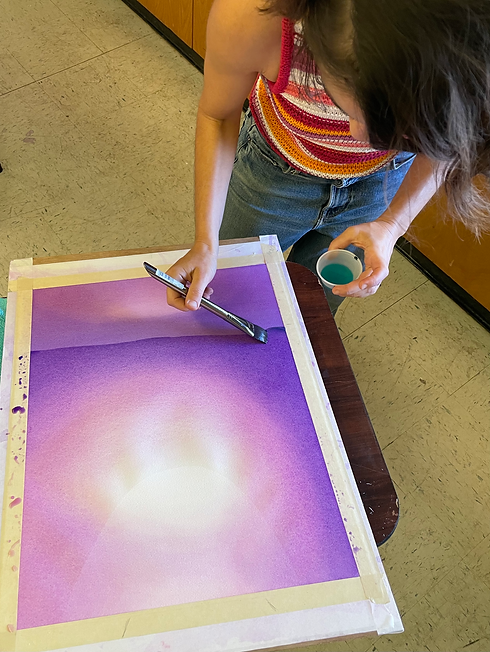
Sessions may include form drawing, charcoal, pastel or watercolor painting, collage, or working with wood, clay, or stone. Each medium engages different human capacities—thinking, feeling, and willing—helping to strengthen and balance these faculties while supporting a deeper sense of self, or “I.”
Anthroposophical art therapy weaves together the arts, therapeutic education, and medical insight. Its foundations come from the work of Rudolf Steiner, Goethe and Ita Wegman, and it has been further developed by artists and researchers such as Margarethe Hauschka and Liane Collot-D’Herbois. This approach draws deeply on an understanding of color, light, and darkness.